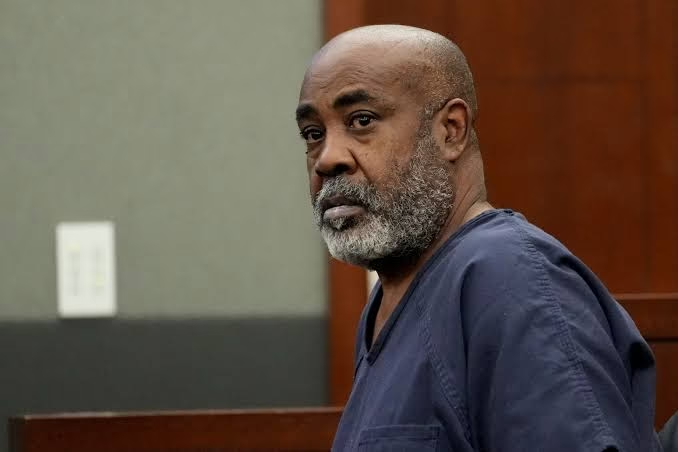

A Nevada jury has found Duane “Keffe D” Davis guilty of first-degree murder in the 1996 killing of rapper Tupac Shakur, bringing a nearly three-decade-old case to its first criminal conviction.
Davis, 63, was convicted Monday in Las Vegas after jurors deliberated for less than three hours. He was found guilty of murder with the use of a deadly weapon in connection with the drive-by shooting that killed Shakur, one of hip-hop’s most influential artists. Prosecutors had also sought a gang enhancement on the charge but dropped that component before the case went to the jury.
The verdict marked a dramatic conclusion to one of the most closely watched unsolved killings in music history.
Davis, a former leader of the South Side Compton Crips, did not fire the shots that killed Shakur, prosecutors said. Instead, they argued that he orchestrated the attack, supplied the weapon and helped direct the group that carried it out.
Prosecutors said the shooting was retaliation for a fight earlier that night involving Shakur, his entourage and Davis’ nephew, Orlando “Baby Lane” Anderson. Shakur and music executive Marion “Suge” Knight had been traveling in a BMW near the Las Vegas Strip when a white Cadillac pulled alongside them at a red light and gunfire erupted.
Shakur was struck multiple times. He died six days later, on Sept. 13, 1996, at age 25. Knight survived the shooting.
For years, the case generated competing theories, speculation and conspiracy claims, while no one was charged in Shakur’s killing.
The investigation gained new momentum after Davis made a series of public statements about the shooting, including accounts in interviews and his 2019 memoir, Compton Street Legend. Prosecutors used those statements extensively during the trial, along with recordings made during investigations.
The prosecution argued that Davis’ repeated descriptions of his involvement over the years amounted to admissions of his role in organizing the killing.
The defense challenged Davis’ statements, arguing that he had exaggerated or fabricated parts of his story for money and publicity and that the prosecution’s case lacked sufficient independent corroboration.
The trial, which began Aug. 10, ran roughly four weeks and centered heavily on Davis’ own accounts of the events surrounding Shakur’s death.
Davis was arrested in September 2023, 27 years after Shakur’s death. He had pleaded not guilty to the murder charge.
Following the guilty verdict, Davis indicated that he intends to appeal the conviction. Judge Carli Kierny ordered him held without bail and scheduled sentencing for Oct. 13. He faces the possibility of life in prison without the possibility of parole.
Shakur’s family welcomed the verdict.
In a statement provided to ABC News, his cousin Aiysha Obafemi said the family was “elated and relieved” by the decision and thanked the jury, friends, supporters and fans who had followed the case for decades.
“While this verdict is decades in the making, this is not the end of the story,” Obafemi said.
The conviction does not answer every question surrounding Shakur’s killing. Davis was prosecuted as the person who helped orchestrate the shooting, but prosecutors did not establish in court that he personally fired the fatal shots.
The other men prosecutors identified as being in the Cadillac have since died, including Anderson, who was killed in a separate shooting in 1998. The identity of the person who actually fired the gun that killed Shakur has therefore remained disputed.
Still, the conviction represents the first criminal judgment in the case and closes a major chapter in a mystery that has remained part of hip-hop culture for almost 30 years.
Shakur’s death, coming during the height of the rivalry between the East and West Coast rap scenes, became one of the defining tragedies of 1990s popular culture. His music and public image have continued to influence generations of artists long after his death.
With Davis’ conviction, the focus now shifts to his sentencing and the appeal he has said he intends to pursue.