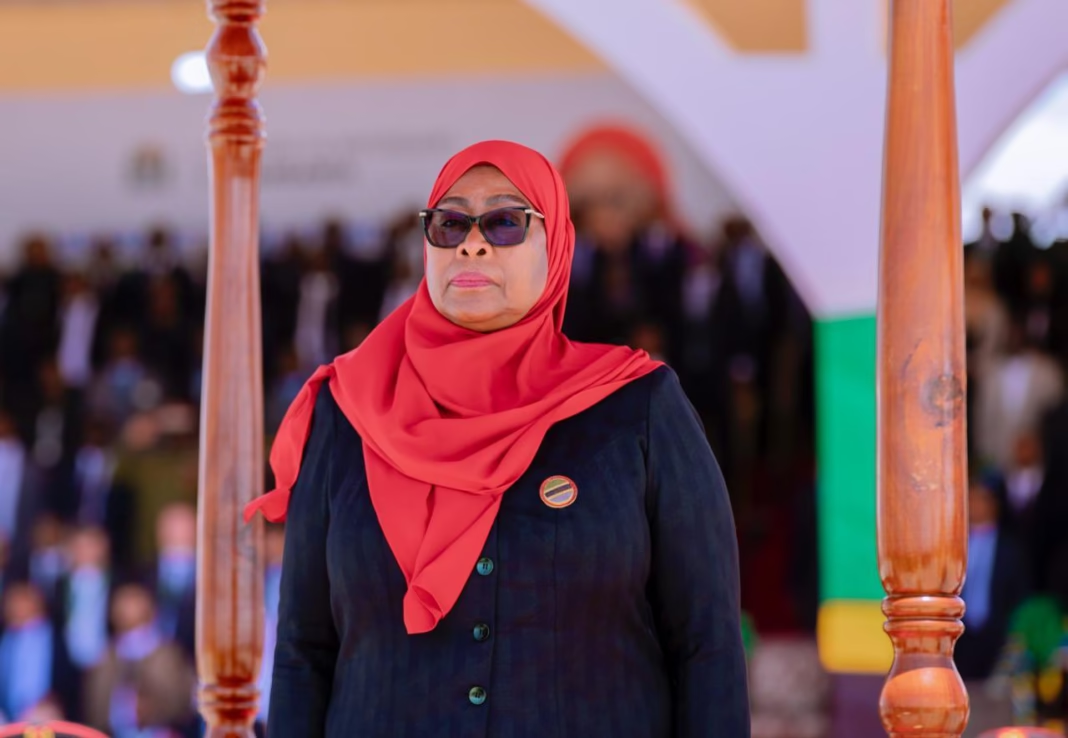
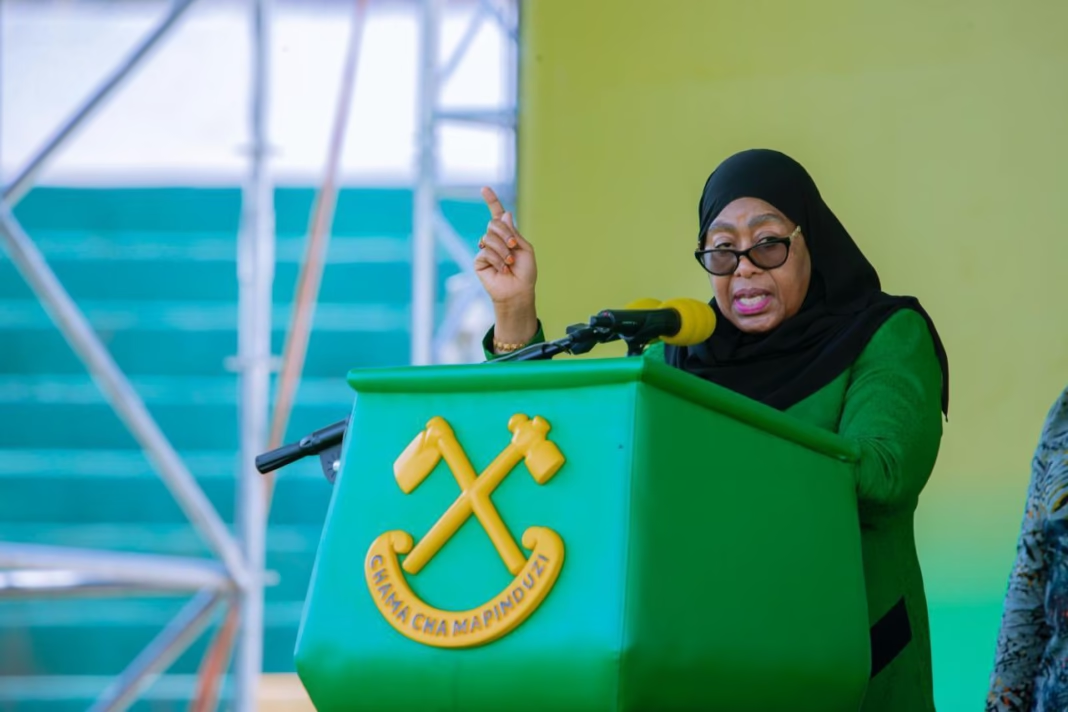

Tanzania’s electoral commission on Saturday declared President Samia Suluhu Hassan the winner of the country’s presidential election, securing nearly 98 percent of the vote in a result that has ignited widespread protests and drawn sharp criticism from opposition groups and international observers.
According to official results, Hassan, who leads the ruling Chama Cha Mapinduzi (CCM) party, claimed almost 98 percent of the vote, with the turnout reported at roughly 87 percent of the 37.6 million registered voters.
But the election was overshadowed by the exclusion or jailing of key opposition leaders including the prominent Tundu Lissu, who remains incarcerated on treason and cybercrime charges and by mass protests that broke out on election day.
Opposition parties contend that the process was inherently unfair. They say the result reflects a political playing field heavily stacked in favour of CCM, which has held uninterrupted power in Tanzania since 1961.
Protesters in cities including Dar es Salaam and Mwanza clashed with security forces following the vote, and opposition officials claim that hundreds of people were killed during the demonstrations. The United Nations human rights office for its part, said it had credible evidence of fatalities and called for a “thorough and impartial investigation” into the use of force. The Tanzanian government has not confirmed casualty numbers and dismissed the higher opposition figures as “hugely exaggerated.”
In her acceptance speech, President Hassan called for national unity and pledged to build on the country’s achievements, stating: “It is time to unite our country and not destroy what we’ve built over more than six decades.”
Yet critics say the outcome underscores a troubling drift toward electoral authoritarianism. Analysts point to the systematic barring of major challengers, escalating repression of dissent and shrinking political space as signs that the election lacked meaningful competition.
Despite these concerns, the CCM remains firmly in control, continuing a run that has outlasted Tanzania’s post-independence era. Whether the incoming term will mark a departure from that pattern or deepen it remains in question.