
The Democratic Republic of the Congo said it will begin implementing a temporary reception facility for third-country nationals starting in April 2026, under a partnership with the United States.
In a government statement issued Sunday, authorities said the mechanism will host individuals involved in U.S. migration processes under arrangements defined jointly by both countries. Officials emphasized that the program will be temporary and will not place any financial burden on the Congolese public treasury.
“The logistical and technical management of the system will be handled by the American government,” the statement said, adding that the initiative respects Congo’s sovereignty, national security requirements and international commitments on migrant protection.
The reception sites will be located in Kinshasa, where authorities say measures have been put in place to ensure administrative, security and humanitarian oversight. Each case will be reviewed individually under Congolese law, with no automatic pathway to permanent settlement.
The announcement comes amid a broader push by Washington to expand so-called third-country deportation agreements, allowing migrants to be sent to countries other than their own when direct repatriation is difficult.
Under this policy, the United States has already reached or explored similar arrangements with several African nations, including Ghana, Eswatini and Rwanda, as part of efforts to accelerate migrant removals.
In a related development, Uganda recently received its first group of deportees from the United States under such an agreement, highlighting how African countries are increasingly being used as transit or temporary host locations in global migration management.
Congo’s government sought to distinguish its plan from permanent resettlement schemes, stressing that it does not constitute “externalization” of foreign migration policies but rather a controlled, time-bound framework under national authority.
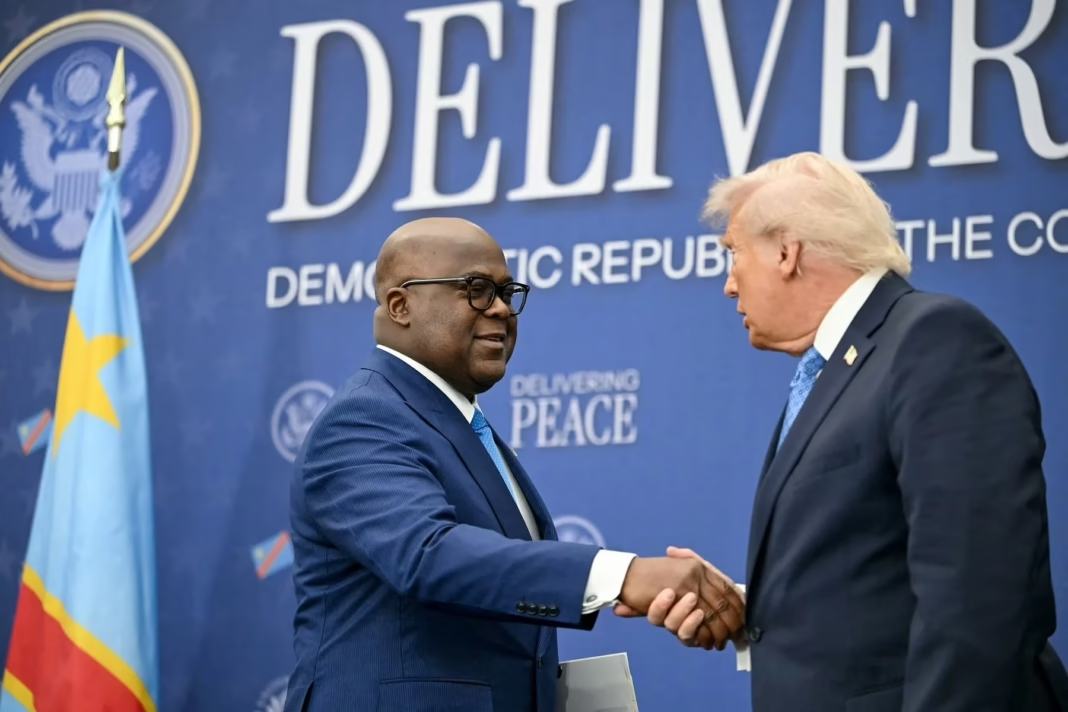
While details such as the number and nationalities of migrants remain unclear, the agreement reflects deepening ties between Kinshasa and Washington, which already cooperate on security, economic and diplomatic initiatives in the region.
The policy has drawn scrutiny from legal experts and human rights groups in other countries, who have raised concerns about the treatment and legal status of migrants transferred to third countries with which they have no direct ties.