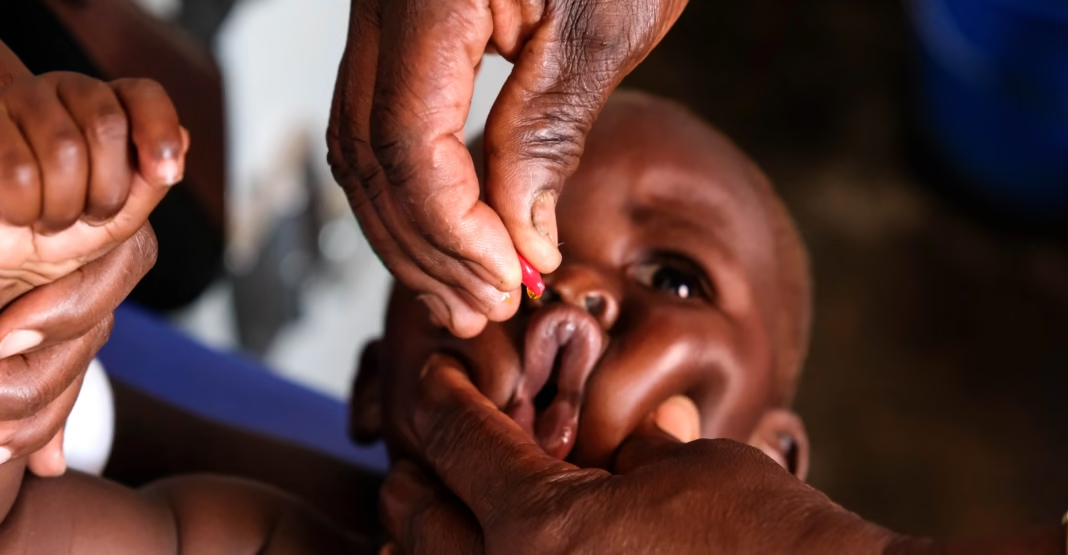

Vaccination efforts for preventable diseases have saved more than 150 million lives worldwide over the past half‑century, the World Health Organisation said Tuesday, as global health leaders prepare for this year’s World Immunisation Week.
In a departmental report released April 2, WHO’s Director of Immunisation, Vaccines and Biologicals, Kate O’Brien, said immunisation “remains one of the most powerful and most cost‑effective tools in public health” and credited vaccines with saving an estimated 150 million lives since 1974.”
“Behind every vaccination is a decision by families, communities and health workers to protect the next generation,” O’Brien said in the statement. “That choice has translated into lives saved, diseases prevented and stronger health systems around the world.”
The WHO figures, cited as part of the 2026 World Immunization Week campaign, show lifesaving vaccines have helped protect people of all ages from more than 30 infections and deadly diseases, including measles, diphtheria, pertussis, polio, rotavirus and conditions like cervical cancer and malaria.
Vaccination has been linked with a dramatic improvement in survival rates, particularly among infants and children. Over the last five decades, immunization decisions have helped contribute to a roughly 40 % improvement in infant survival, and vaccines have also prevented tens of millions of children from lifelong disabilities associated with preventable diseases.
O’Brien noted that nearly 20 million children missed at least one vaccine dose in 2024, with more than 14 million not receiving any vaccine doses at all. The gap underscores lingering challenges in reaching universal vaccination coverage.
“Progress cannot be taken for granted. Backsliding is an ever‑present risk,” she said, emphasizing the importance of sustained political leadership, community trust and continued investment in immunization programs.
This year’s World Immunisation Week observed April 24‑30 under the theme “For every generation, vaccines work” aims to reinforce the message that vaccines have protected people, families and communities across generations and continue to be a key component of global health security.
Health officials said ongoing efforts are focused on closing immunity gaps, expanding access to existing vaccines, and introducing new vaccines into national immunization schedules to further reduce preventable deaths worldwide.