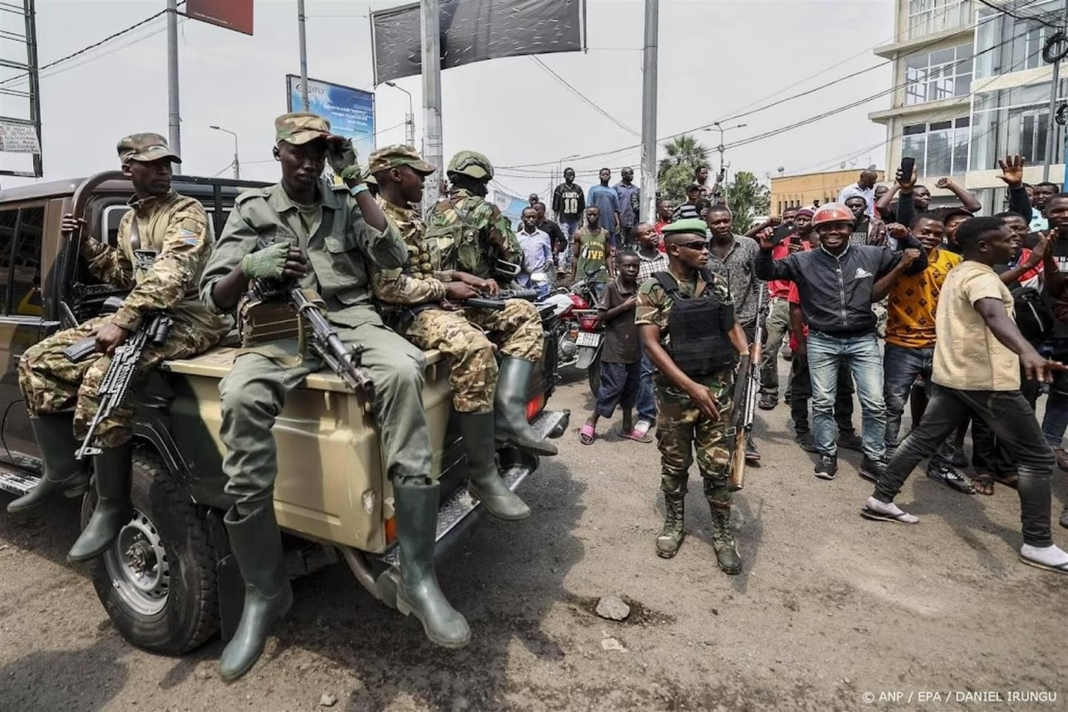
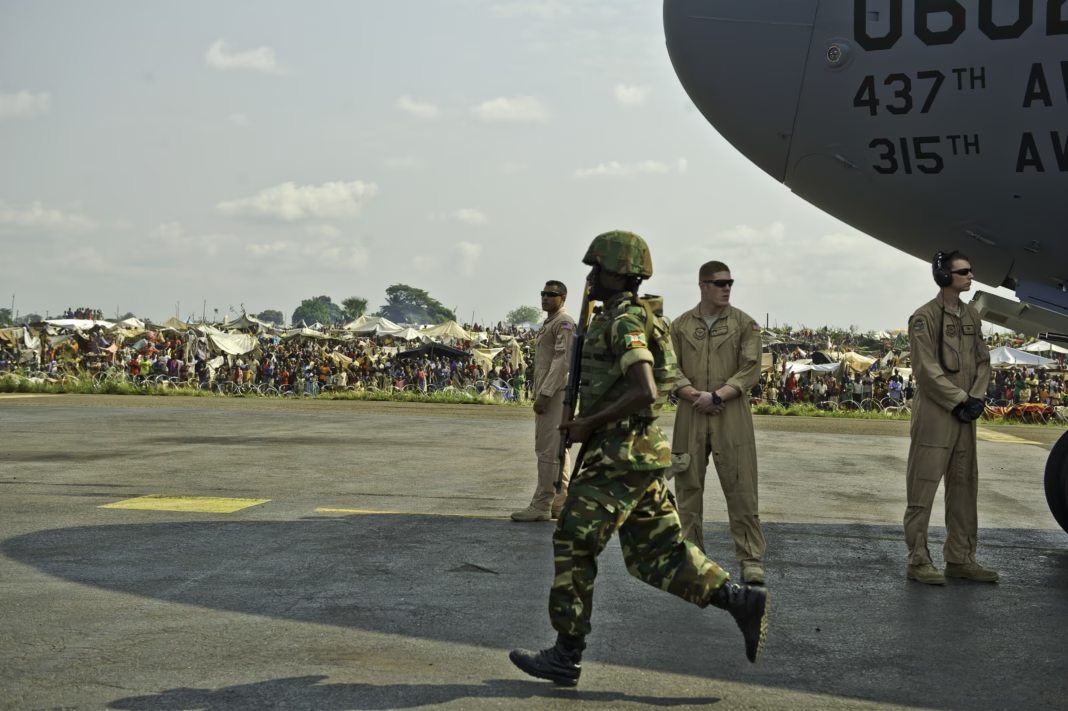

Military officials from Burundi and Uganda visited Israel last week to discuss the possible deployment of troops to Gaza as part of the International Stabilisation Force (ISF), the multinational body proposed under the U.S.-backed Gaza peace plan, according to officials involved in the talks.
No agreement has been finalized, and the size or timing of any Burundian deployment has not been announced. A Board of Peace official told The Associated Press that Burundian representatives expressed interest in the mission during the visit. “We shared significant knowledge with one another, and the Burundi representatives expressed interest in our mission,” the official said, speaking on condition of anonymity because the talks with potential troop-contributing countries have not been finalized.
Burundian military spokespeople did not respond to requests for comment.
Force still short of original target
The ISF was envisioned as a roughly 20,000-strong force under the command of U.S. Maj. Gen. Jasper Jeffers, tasked with monitoring the Gaza ceasefire, supporting the training of Palestinian police and facilitating humanitarian deliveries. Troop commitments to date remain below that figure.
Uganda’s parliament has approved a contribution of about 1,200 personnel, and Ugandan officials say they are finalizing details of their deployment. Morocco has pledged up to 500 troops. Kosovo, Kazakhstan and Albania have committed roughly 80 personnel combined. Indonesia had earlier said it was preparing to send 8,000 troops, the largest pledge to date, but paused those plans following U.S. and Israeli strikes on Iran.
If Burundi proceeds, it would join this existing group of contributing countries. No Burundian troop figure has been made public.
U.S. funding announced in July
In two notifications dated July 30 and reviewed by Reuters, the U.S. State Department informed Congress it would provide more than $206 million to support the ISF. Of that, $200 million is designated for equipment, infrastructure, vehicles and operational costs. An additional $6 million will fund the repurposing of nine armored personnel carriers, originally intended for Nepal, which will instead be sent to Albania and Kosovo.
State Department spokesman Tommy Piggott said the funding reflects the administration’s commitment to the ISF as part of the broader peace plan, and said the Board of Peace has made “steady progress.” Separately, member countries had pledged about $17 billion toward Gaza’s reconstruction, though Reuters has reported that only a fraction of that amount has been disbursed to date.
Somalia experience cited
Both Burundi and Uganda have contributed troops for years to African Union operations against al-Shabab militants in Somalia. Paul D. Williams, director of the security policy studies program at George Washington University, said both countries have built substantial peacekeeping experience through those deployments.
Ceasefire terms remain contested
Under the U.S.-brokered agreement announced last month, Hamas is to disarm in phases as Israeli forces withdraw from Gaza, with the ISF assuming security responsibility in areas transferred to an incoming technocratic administration. Hamas has said it agreed to the disarmament framework, but has said implementation depends on Israel first meeting its own commitments, including halting attacks and beginning withdrawal.
Israeli Prime Minister Benjamin Netanyahu has said Israel will not withdraw from territory it controls in Gaza until Hamas has been fully disarmed.
According to Gazan health officials and the Israeli military, more than 1,200 Palestinians and four Israeli soldiers have been killed in Gaza since the ceasefire took effect in October.
No deployment date set
Officials involved in the talks describe Burundi as interested and moving toward participation, but not yet a confirmed troop contributor. No details on troop numbers, rules of engagement or a deployment timetable have been announced by either Bujumbura or the Board of Peace.