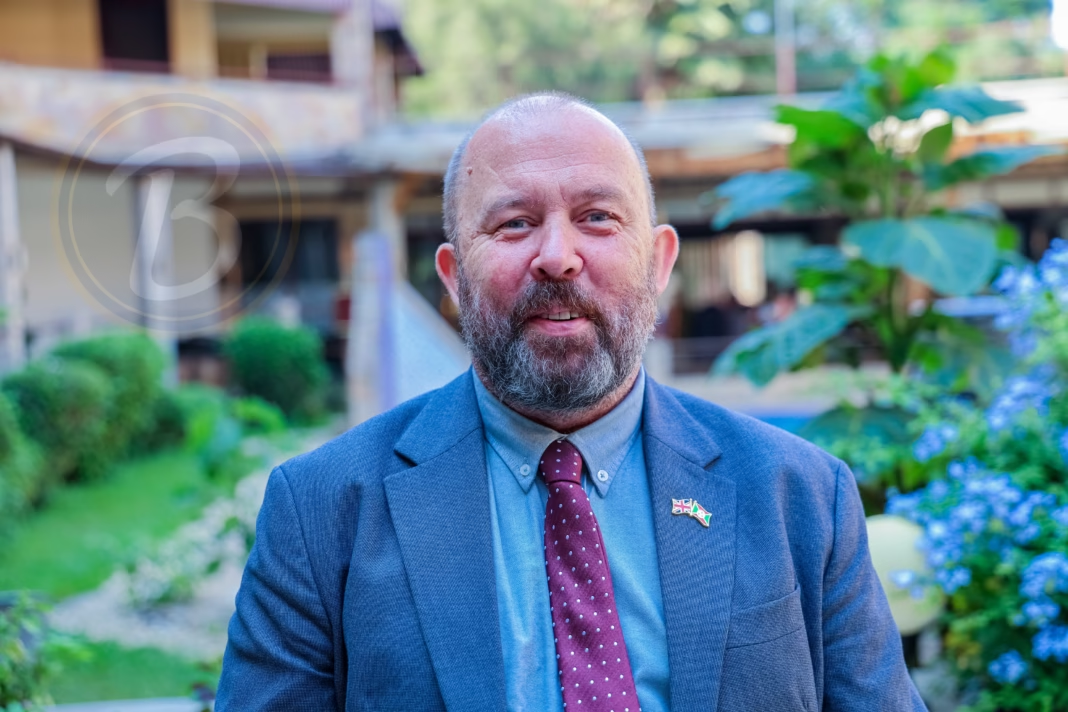

Billy Stewart is the Development Director at the British High Commission in Kigali and Gitega, where he leads the United Kingdom’s development partnership and aid strategy for Burundi. In an interview this week, Stewart spoke to Burundi Times about UK aid priorities amid shrinking global budgets, Burundi’s relationship with Rwanda, reforms to the coffee sector, climate resilience, and how his previous posting in the Occupied Palestinian Territories during the Gaza war shaped his approach to the role.
Havyarimana: UK aid budgets have faced real pressure in recent years. With so many countries competing for a smaller pool of funding, what’s kept Burundi on the list of priorities for the UK, and how do you make that case internally?
Stewart: I’m really pleased that we’ve been able to partner with the government of Burundi, and with other partners, across a wide range of sectors in recent years.
That includes strengthening health systems. It includes working on humanitarian issues for refugees and Burundian returnees. It includes climate work, and it includes extending access to energy both through hydro-power and expanding the grid.
It’s not always easy to make the case in a world with so many competing priorities. But what we’ve been able to do is point to what is possible here: we have a partner government that’s committed, we have strong and capable partners on the ground, and we’re able to achieve real results.
Take electricity. If we extend the grid, that doesn’t just connect families and communities it connects businesses, improves the ground for investment, and connects vital services like hospitals and schools. That’s the argument we make to keep the investment flowing.
There are big humanitarian crises in many parts of the world right now, and we’re facing the threat of El Niño and related humanitarian need later this year. So it’s about showing what we can achieve here, that we’ve got the right partners and the right partnerships to deliver results.
Havyarimana: You lead UK development policy for Burundi from Kigali. Given how much history sits between Gitega and Kigali, how do you make sure Burundian partners feel this is a Burundi-focused relationship, and not an extension of Rwanda policy?
Stewart: It’s true, I’m normally based at the High Commission in Kigali. But we also have an office here in Bujumbura, with three very capable, very talented Burundian staff who work with us.
They report what’s happening on the ground, so we always have the latest information on developments here in Burundi.
My colleagues and I also visit frequently. I’ve been in post for one year, and this is already my third visit to Burundi. That helps me understand things better on the ground, and hear the voices of Burundians directly.
I’ve travelled to the east to look at the humanitarian situation. I’ve met with key figures in the Burundian government — this week alone, the Minister for Foreign Affairs and the Permanent Secretary in the Ministry of Health. I’ve visited schools and hospitals. I was in Gatumba this week, looking at community healthcare.
All of that grounds my understanding of what’s happening in Burundi, and makes sure I’m not just assuming things. I’m actually listening to Burundian voices when I make decisions about our programmes.
Havyarimana: You mentioned meeting several ministers and officials. If it’s in the public domain, what was the outcome of those meetings, or what were the expectations going in?
Stewart: I think you may have seen the social media post from the Minister of Foreign Affairs this week about our meeting.
We discussed a wide range of issues in the UK-Burundi partnership in health, energy, and the visit of the Archbishop of Canterbury. It was a very warm meeting, and it set the basis for a strong partnership going forward.
Havyarimana: The UK has pointed to coffee export facilitation as a flagship area of cooperation. Farmers here often feel the gains from liberalisation flow more to exporters and middlemen than to growers themselves. Are there reforms the UK would consider backing to get more of that value back to growers directly?
Stewart: Burundian coffee is among the best in the world. It’s superb. And there’s strong potential for the sector to grow, particularly in exports.
We were happy to respond to a request from the government of Burundi to carry out a study on tax in the coffee sector looking specifically at the potential role of the Burundi Revenue Authority in revenue mobilisation through coffee. It’s part of a broader body of work we’ve been doing in support of government priorities on tax, giving the government case studies on how to strengthen tax collection.
If we can strengthen and clarify administrative and tax requirements across the coffee value chain, that benefits not just the Burundian government, but producers too.
We also share our findings with other key agencies here, such as the World Bank, who are free to use them to support their own partnership with the government of Burundi.
Havyarimana: British International Investment has backed Virunga Power. Could you walk us through what the UK hopes to get out of that investment, and what it means in practical terms for communities on the ground?
Stewart: The UK is actually one of the top investors in Burundi’s power and energy sector, through a number of routes.
British International Investment supports the Ruzizi III hydro-power station, which will increase power generation once it’s completed. BII also backs Weza Power and Songa energy, both exploring new hydro-power and renewable sources as well as working to expand the grid, with access to electricity expected to grow across half the country over the next decade or so.
“It has real potential to develop communities, attract investment, and strengthen services.”
But energy isn’t the only thing we’re doing on climate. We also have a partnership between the Burundian Meteorological Office and the UK Met Office on climate forecasting, to better understand upcoming climate risks and prepare for them.
I mentioned at the beginning, El Nino, and we know that there are forecasts that there will be significant disruption and threat of climate events like floods in the coming year. So, these kinds of partnerships help us and help our support to the Burundian government to better prepare for climate related risks.
Havyarimana: How, specifically are you supporting preparedness? We’ve seen disasters happen already the landslides and floods in Gatumba.
Stewart: We’re providing technical support to the government in a number of areas.
A key partnership is around weather and climate forecasting, to better understand risks, alongside working with other humanitarian partners on preparedness and response. In the past year we’ve also worked with the World Food Programme to support food assistance for refugees.
That positions us to respond quickly to needs arising from any climate-related disasters here.
Havyarimana: You came into this role from serving as Development Director for the Occupied Palestinian Territories during the Gaza war. Is there anything from that chapter shaping how you approach the work here?
Stewart: I worked on our support to the Occupied Palestinian Territories, including during the current conflict in Gaza. I took three things from that experience into my work here.
First, trust your partners. Once the conflict in Gaza began, I could no longer travel there myself, so I had to rely heavily on our partners on the ground and the information they gave me to make sure what we were doing would have the greatest impact.
Second, stay flexible. Things can change rapidly. As we saw only yesterday in Gatumba, it isn’t just the threat of natural disaster there’s also the threat of infectious disease, given the Ebola outbreak currently underway in eastern DRC. You have to be able to respond to needs as they develop.
And finally, measure your results. It’s essential to demonstrate real impact that’s what helps us make the case for further support and funding in these areas.
Havyarimana: UK-Burundi development cooperation doesn’t get much media coverage. What do you think is behind that, and is there anything in the works to change it?
Stewart: There’s a lot competing for attention globally right now, the situation in the Middle East, the Ebola outbreak in eastern DRC, and more. It’s sometimes hard to get visibility for the work we’re doing here in Burundi.
So we’re trying to improve our social media presence. You’ll have seen posts this week on the Archbishop of Canterbury’s visit, and on our healthcare support work. Interviews like this one help us get the message out that we’re pleased to be working here, that we believe this work is genuinely effective, and that there’s real potential in what we can achieve together.