


Tucked into the heart of East Africa’s Great Lakes region, Burundi is a country whose dramatic geography and deep-rooted traditions are quietly capturing the attention of conscious travellers. Long overshadowed by its larger neighbours, this small, green, mountainous nation offers something increasingly rare: raw, crowd-free experiences, from pristine freshwater coastlines to ancient royal ritual sites.
For travel writers and off-the-beaten-path wanderers, Burundi delivers an authentic, unfiltered taste of East Africa. Here are the essential stops and flavours every traveler should have on their radar.
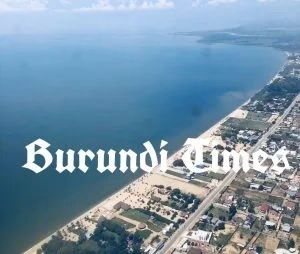
1. Bujumbura & the Shores of Lake Tanganyika
Burundi’s former capital and economic hub sits right on the edge of Lake Tanganyika, one of the oldest and deepest freshwater lakes on Earth.
The vibe here is unexpectedly Mediterranean. White sandy stretches like Saga Beach invite travelers to sample freshly caught mukeke fish at open-air waterfront restaurants, sip locally grown coffee, and watch the sun dip below the lake’s horizon. A short drive north leads to Rusizi National Park, where hippos and Nile crocodiles laze along the river delta — an effortless wildlife encounter right on the city’s doorstep.

2. Gishora Drum Sanctuary
Perched on a hilltop near the political capital of Gitega, the Gishora Drum Sanctuary is Burundi’s cultural heartbeat.
Recognized by UNESCO as a piece of Intangible Cultural Heritage, the sanctuary centers on the ritual of the Ingoma — the royal drums. Visitors watch master drummers deliver high-energy, acrobatic performances rooted in centuries of Burundian monarchy tradition. It’s less a show than a thunderous, immersive ceremony that echoes through the surrounding hills.
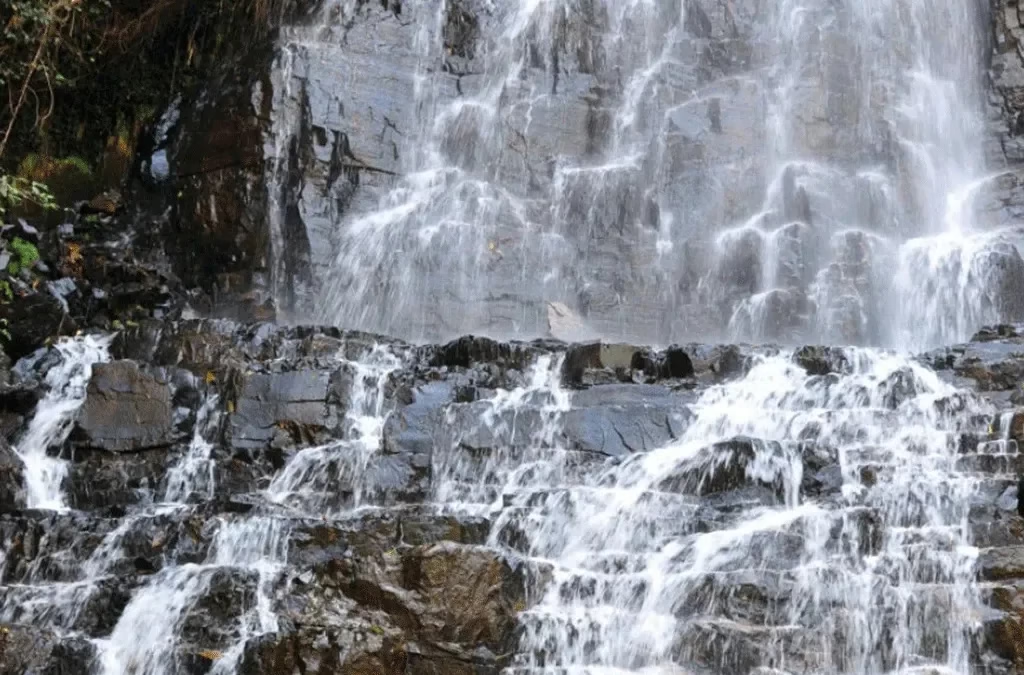
3. Karera Waterfalls (Chutes de la Karera)
In the southeastern province of Rutana, the Karera Waterfalls form a striking network of multi-tiered cascades flowing through lush highland forest.
Shaded footbridges and stone steps lead visitors through eucalyptus-scented trails to natural rock pools perfect for cooling off. During the rainy season, mist from the falls throws persistent rainbows across the canopy, making this one of the most photogenic natural landmarks in the country.
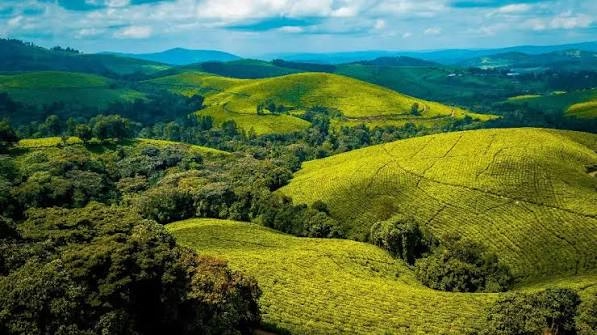
4. Kibira National Park & Teza Tea Country
High in the misty mountains of northwestern Burundi, Kibira National Park protects a dense stretch of primary rainforest home to chimpanzees, black-and-white colobus monkeys, and hundreds of bird species.
Bordering the park, the rolling emerald hills of Teza Tea Country offer a serene counterpoint to the wild canopy. Walking through the hand-manicured plantations is also a chance to sample some of East Africa’s finest tea, straight from the source.
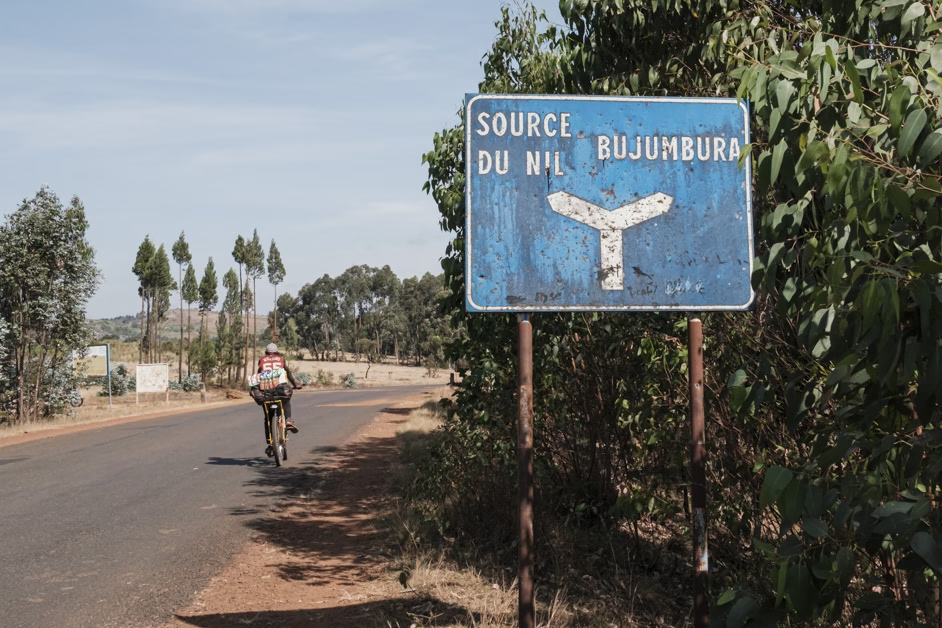
5. The Source of the Nile at Rutovu
For history buffs and geography enthusiasts, a trip to Rutovu leads to the southernmost headwaters of the Nile River. Marked by a modest stone pyramid known as the Caput Nili, this quiet, windswept spot in the southern highlands invites a contemplative pause at the origins of Africa’s most storied river.
What to Eat: A Taste of Burundi
Burundian cuisine is hearty, largely plant-based, and built around what the land and lake provide.
- Mukeke — A delicate white fish pulled from Lake Tanganyika, usually grilled whole and served with rice or plantains at Bujumbura’s lakeside restaurants.
- Ubugali — A dense, savory dough made from cassava or maize flour, served as the everyday starch alongside stews, beans, or grilled meat.
- Ibiharage — Slow-cooked red beans, often stewed with palm oil and vegetables, found on nearly every home and roadside menu.
- Brochettes — Skewered, charcoal-grilled goat or beef, sold at street stalls and paired with a cold local Amstel or Primus beer.
- Burundian coffee — Grown in the country’s volcanic highlands, the coffee here rivals its more famous regional counterparts and is best sampled fresh near the plantations outside Bujumbura and Ngozi.
- Fresh tropical fruit — Bananas, avocados, and passion fruit are abundant and cheap, sold at markets throughout the country.
Essential Travel Tips
- Best time to visit: The dry season, from May to September, offers the best road conditions for the highlands and ideal weather for the beaches of Lake Tanganyika.
- Getting around: Hiring a private 4×4 with a local driver-guide is the smoothest way to navigate the country’s winding mountain terrain.
- Local currency: The Burundian Franc (BIF) is the local currency. Carry cash, as card readers remain limited outside major hotels in Bujumbura.