
The deaths of two kings a day apart have drawn public criticism from social media users who say East African leaders responded far more visibly to the death of a European monarch than to that of their African neighbor.
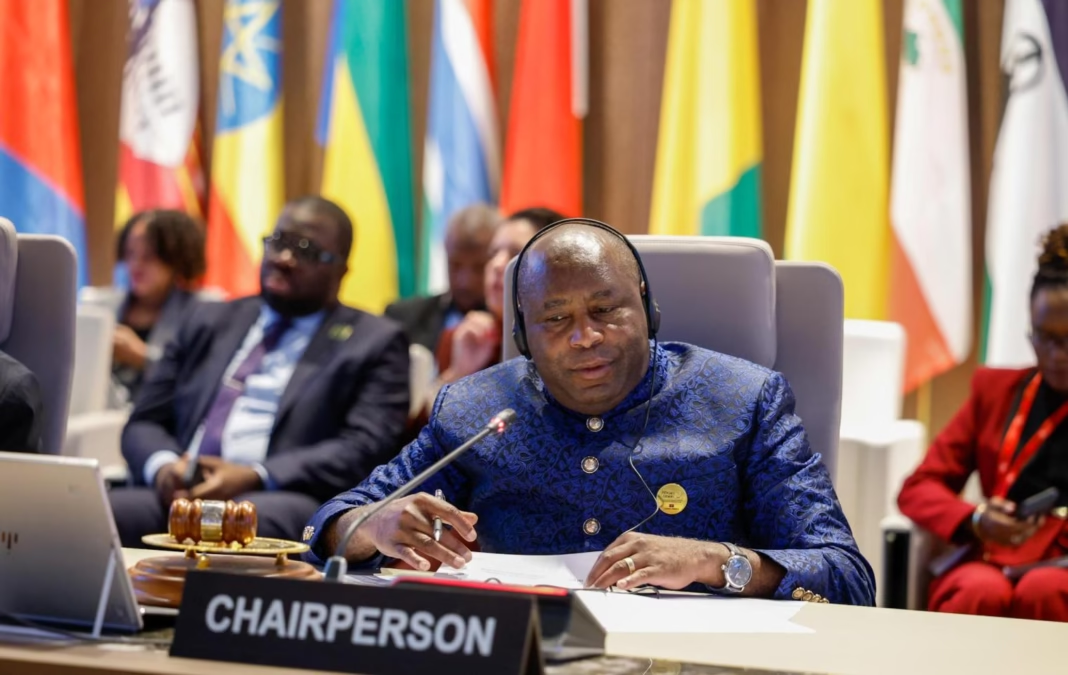
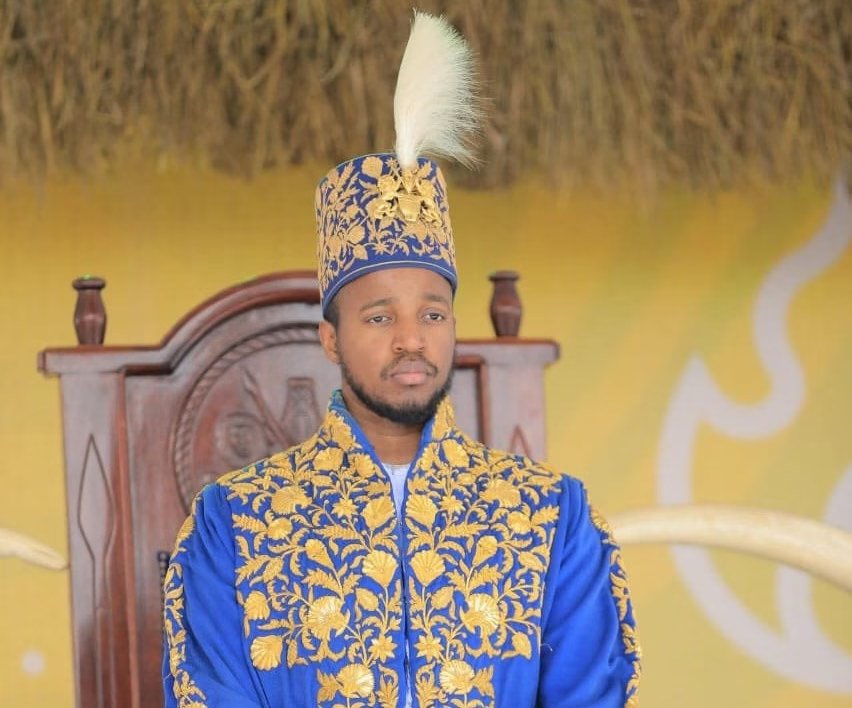
Uganda’s Omukama Oyo Nyimba Kabamba Iguru Rukidi IV of Tooro died Aug. 27. Norway’s King Harald V died the following day. President Évariste Ndayishimiye of Burundi, President William Ruto of Kenya and President Samia Suluhu Hassan of Tanzania each publicly extended condolences to Norway following Harald’s death.
A review of publicly available statements did not turn up a comparable public message from any of the three leaders on Oyo’s death, nor from Rwandan President Paul Kagame on either monarch’s passing. That absence does not establish that no private diplomatic communication took place, but it has become the basis of criticism circulating online.
“I am deeply ashamed of the attitude of some East African leaders,” the user behind the X account @WilsonLixon, who posts under the name Hon. Wilson-Lixon an identity that could not be independently confirmed wrote on Aug. 29. The post named Ndayishimiye, Ruto and Samia Suluhu Hassan directly, argued that the leaders had shown “selective recognition,” and said the account holder was “still waiting to see” whether Kagame would acknowledge Oyo’s death at all. It also credited President Yoweri Museveni by name for Uganda’s own mourning measures, drawing a contrast with what it described as the silence of neighboring governments.
The criticism gained a further data point the next day. Georgian President Mikheil Kavelashvili posted his own condolences to Tooro on Aug. 29, “I extend my sincere condolences on the passing of His Majesty King Oyo,” he wrote a message Ugandan commentator Herman Kinene contrasted, in a post on X, with the absence of similar messages from Uganda’s immediate neighbors, asking why “a neighbour hasn’t sent” condolences “but instead sent to Norway.”
The criticism does not extend to Uganda’s own government, which mourned Oyo prominently. Museveni issued a personal condolence message, ordered flags flown at half-mast for three days, and directed that the king receive an official burial. Uganda’s Parliament held a moment of silence, and Buganda and other Ugandan traditional kingdoms issued public tributes of their own.
Oyo ascended the Tooro throne at age three in 1995 and was recognized for years as the world’s youngest reigning monarch. Tooro holds no constitutional political power in Uganda’s republican system but retains substantial cultural influence in the country’s west.
Harald, by contrast, was the constitutional head of state of a sovereign nation, a distinction that typically shapes diplomatic protocol condolences to a fellow head of state are more standard practice than equivalent messages to a traditional monarch without sovereign authority.
That distinction is part of what online critics say does not fully explain the disparity, given Tooro’s cultural weight and its geographic proximity to the countries whose leaders did not issue equivalent messages.
There is no evidence that Burundi, Kenya, Rwanda or Tanzania deliberately chose to disrespect Tooro or its king, and a public condolence to Norway does not necessarily indicate that any of the leaders regarded Harald as more significant than Oyo. But the criticism, amplified by accounts with meaningful reach on X, has renewed a broader question about how African governments publicly recognize African traditional institutions.