
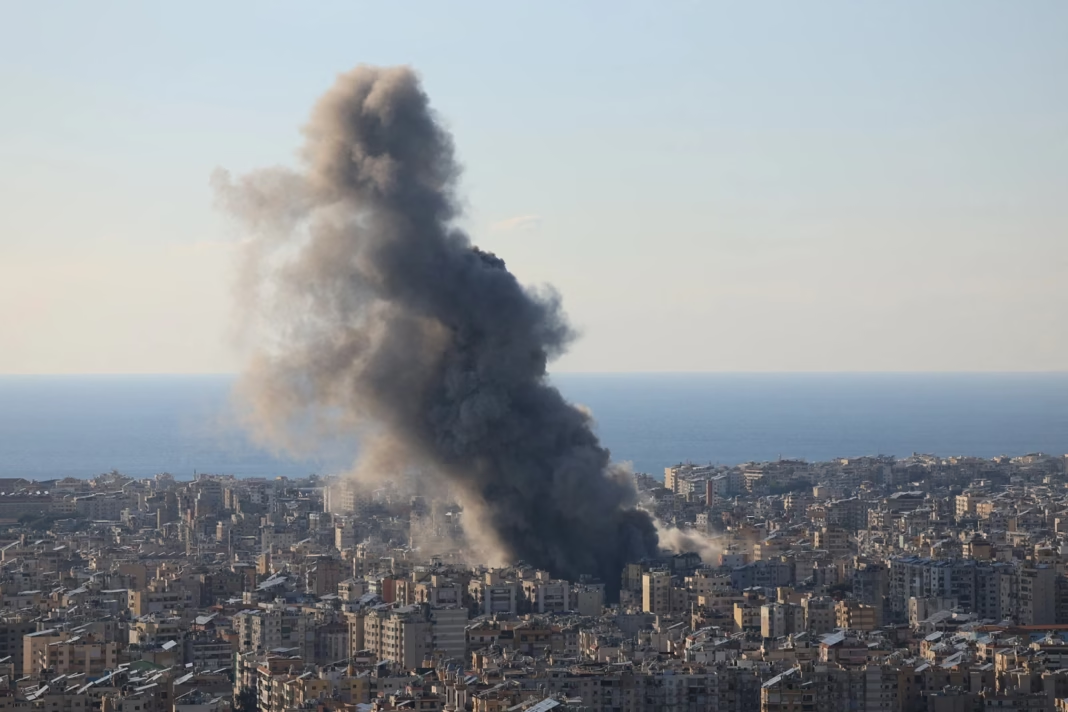

Shipping disruptions, soaring energy and fertilizer costs hit emerging markets hard
WASHINGTON — The World Bank Group is moving to deploy emergency financial support to developing nations reeling from the economic fallout of the Middle East conflict, as surging commodity prices and shipping disruptions ripple across global markets.
The multilateral lender said it is in direct contact with the most affected client countries and is drawing on its full range of financial instruments to provide relief, including crisis response tools, pre-arranged financing facilities, and fast-disbursing instruments tied to policy reforms.
The economic toll on emerging markets is already significant. Crude oil prices climbed nearly 40 percent between February and March, the price of liquefied natural gas shipments to Asia rose by almost two-thirds, and nitrogen-based fertilizer prices surged nearly 50 percent in March alone — straining food security and government budgets across the developing world.
The Bank said supply risks have broadened beyond energy markets, spreading into fertilizers and other critical agricultural inputs, while shipping route disruptions are driving up logistics costs for import-dependent economies.
“We are ready to respond at scale — combining immediate financial relief with policy expertise and private sector support for the recovery of jobs and growth,” the World Bank Group said in a statement.
Through its private sector arms, the institution said it would provide firms with liquidity support, trade finance, and working capital to help sustain economic activity during the crisis.
The World Bank struck a cautious tone about the outlook, acknowledging the situation remains fluid.
“Clearly, this is an evolving situation and we cannot predict the full range of impacts,” the Bank said. “The longer this lasts, and the more damage there is to critical infrastructure, the more challenging this will be for our clients.”
Despite the uncertainty, the institution said it remains committed to protecting economic gains made by developing nations in recent years.
“We are determined to be helpful and do all we can to safeguard some of the hard-won economic progress that these countries are making,” the statement read.
The World Bank said it is coordinating its response with governments, the private sector, regional partners, and other stakeholders.