

Regional lawmakers warn low-resource languages risk being left behind as artificial intelligence reshapes communication, education and public services.
The East African Legislative Assembly on Monday called for faster digitisation of African languages, warning that millions of people could be excluded from the benefits of artificial intelligence unless governments, researchers and technology companies invest in language technologies that support Kiswahili and other indigenous languages.
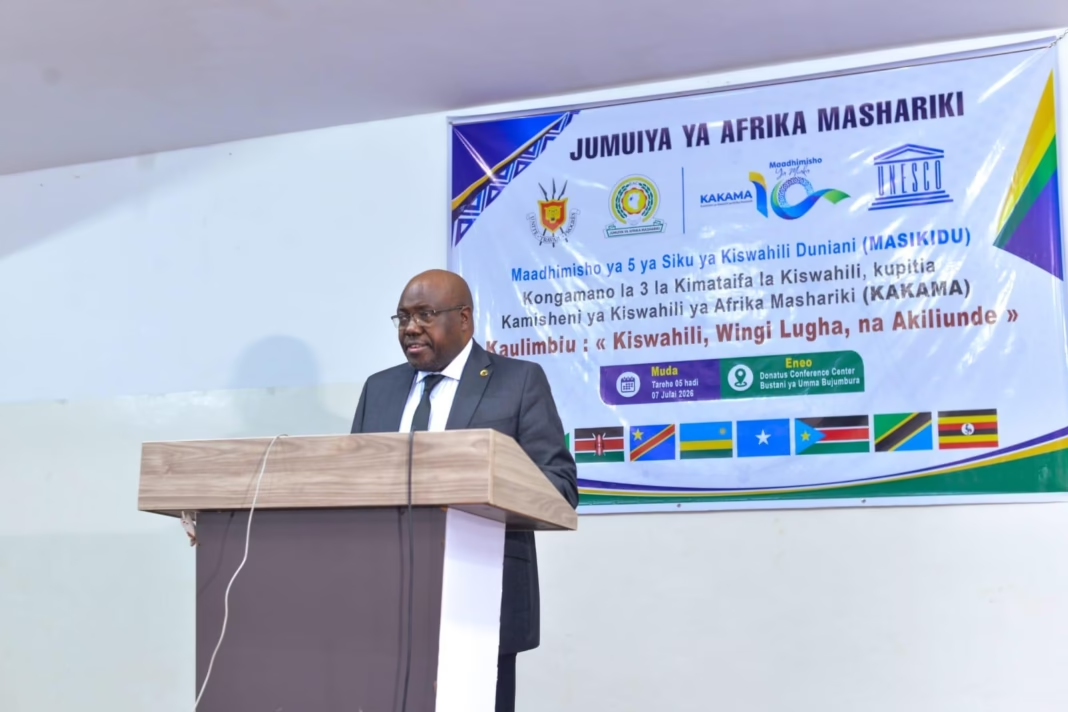
Speaking at the opening of the 5th EAC World Kiswahili Language Day and the 3rd East African Kiswahili Commission International Conference in Bujumbura, EALA Speaker Rt. Hon. Joseph Ntakirutimana said the rapid evolution of AI presents both an opportunity and a challenge for African languages, many of which remain poorly represented in digital systems.
“Language is more than a tool of communication; it is a carrier of history, culture, identity, and values,” Ntakirutimana said. “The inclusion of Kiswahili in the digital ecosystem is essential to safeguarding Africa’s heritage while expanding opportunities for its people.”
His remarks come as artificial intelligence technologies including machine translation, speech recognition, chatbots and large language models—are increasingly shaping how people communicate, learn and access information worldwide. While major global languages have benefited from vast digital datasets used to train AI systems, many African languages remain underrepresented, limiting their presence in emerging technologies.
Conference organisers said that imbalance risks widening what experts increasingly describe as a “digital language divide,” where speakers of low-resource languages have fewer opportunities to benefit from AI-powered education, government services and digital innovation. The conference’s concept note identifies limited linguistic data, inadequate digital resources and insufficient investment as major barriers to integrating Kiswahili and other African languages into AI systems.
Ntakirutimana echoed those concerns, warning that “many African languages remain underrepresented in digital platforms due to limited language data, resources, and investment” and cautioned that “without intentional interventions, millions of Africans could be excluded from the benefits of the digital revolution.”
The three-day conference, held under the theme “Kiswahili, Multilingualism, and Artificial Intelligence,” has brought together policymakers, linguists, academics, technology experts, development partners and youth representatives from across the East African Community to examine how AI can support language preservation, education and regional integration.
Beyond preserving culture, participants are examining the strategic role of language in East Africa’s digital economy. Organizers say expanding AI tools for Kiswahili could improve access to education, public services, trade and cross-border communication while strengthening regional integration. The conference also aims to generate policy recommendations and encourage partnerships between governments, universities and technology developers to accelerate research and innovation in language technologies.
Ntakirutimana said regional institutions should lead by example. He disclosed that EALA is working with the East African Kiswahili Commission to expand the use of Kiswahili in parliamentary proceedings and committee work, while also exploring digital tools that could support Kiswahili transcription for parliamentary Hansard reporting.
“The East African Legislative Assembly is working closely with the East African Kiswahili Commission to enhance the use of Kiswahili in parliamentary proceedings and committee work,” he said, adding that digital transcription technologies could strengthen the language’s role in legislative processes.
Artificial intelligence has become a growing area of policy interest across Africa as governments seek to balance technological innovation with the protection of local cultures and languages. Technology experts have long argued that AI systems trained primarily on English and other high-resource languages risk reinforcing existing inequalities by excluding communities whose languages lack sufficient digital content.
The conference is expected to conclude with the Bujumbura Declaration, a regional roadmap and policy recommendations intended to guide governments, academic institutions and technology partners on integrating Kiswahili into AI and other digital technologies. Organizers also plan to showcase AI-powered applications designed to support the learning, preservation and dissemination of Kiswahili.
Addressing young innovators attending the conference, Ntakirutimana said empowering youth with digital skills would be essential to building AI tools that reflect African languages and realities.
“Technology should be harnessed to strengthen African languages, preserve cultural identity, and foster inclusive development across the region,” he said, urging governments, researchers and technology developers to work together to ensure Kiswahili “thrives not only in schools, communities and public institutions but also in the rapidly evolving world of Artificial Intelligence and digital innovation.”